


Learning how to talk to your doctor about a medical card doesn’t have to feel like walking into an interrogation. Many patients sit in the exam room rehearsing what to say, then freeze when the doctor walks in. Fear of judgment or rejection can stop the conversation before it starts, leaving you without the relief you need.
This guide gives you a tested script you can use word-for-word. It shows you which medical records make your case stronger. It explains what your primary care doctor can legally do and when they can’t help at all. You’ll also learn when skipping your PCP and using a telehealth evaluation makes more sense for your situation.
How to talk to your doctor about a medical card

Walking into your doctor’s office to ask about a medical card can feel overwhelming. Your heart races, your mind goes blank, and suddenly the script you practiced vanishes.
This reaction is normal. You’re not doing anything wrong.
The Stigma That Still Exists in Healthcare Settings
Many doctors trained decades ago learned to view cannabis with skepticism. Medical schools historically taught that cannabis had no medical value and posed only risks.
Older physicians may carry those beliefs into practice today. They might hesitate when you bring up the benefits of a medical card. This isn’t because they judge you personally. Their training created doubt about cannabis as medicine.
This generational divide in medical education creates real barriers. You sense the hesitation and worry you’ve said something wrong.
Fear of Being Labeled or Dismissed
Patients worry that asking will damage their relationship with their doctor. You fear a note in your chart that labels you as drug-seeking or difficult.
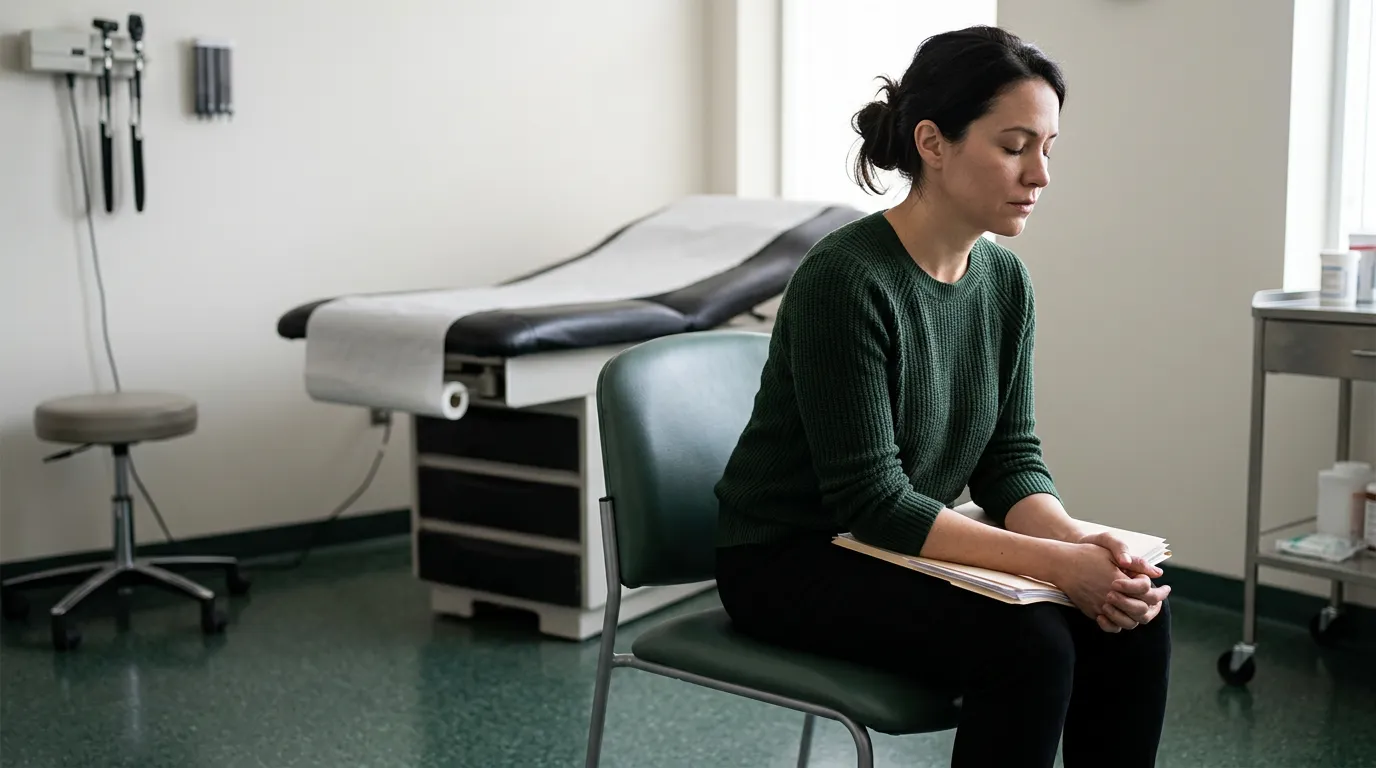
These concerns have roots in reality. Some doctors do dismiss pain complaints or assume patients want cannabis for recreational use. The fear that your request might affect future care or insurance coverage feels rational.
Many patients who successfully obtained medical marijuana cards in California report feeling this same anxiety before their appointments. Reading patient reviews from others who navigated this conversation helps you realize you’re not alone.
Preparation reduces this anxiety. A clear script gives you control over the conversation. You’ll present your case calmly, show you’ve tried other options, and ask for professional guidance rather than demanding a specific outcome.
Your nervousness doesn’t reflect the validity of your request. It reflects a healthcare system still adjusting to cannabis as legitimate medicine.
What to Say: The One-Minute Script That Works
The most effective approach uses a simple three-part structure. Start by describing your symptoms and how long you’ve experienced them. Next, explain what treatments you’ve already tried and why they haven’t worked well enough. Finally, ask for a licensed evaluation rather than requesting a specific treatment.
This framework works because it shows you’re informed, have exhausted conventional options, and respect your doctor’s professional judgment. You’re not demanding cannabis. You’re asking whether a medical marijuana card evaluation in your state might be appropriate.
The Three-Part Framework for Any Condition

Keep your opening statement under one minute. Say what condition you’re managing and how it affects your daily life. Be specific about functional problems like missed work, disrupted sleep, or activities you can no longer do.
Then list what you’ve tried: medications, physical therapy, counseling, or specialist care. Mention side effects or inadequate relief. This demonstrates you’ve worked through standard treatment options before exploring alternatives.
End by asking for guidance. Say you want to explore whether a medical card evaluation makes sense for your situation. This positions your doctor as the expert making recommendations, not someone being pressured.
Example Scripts for Chronic Pain, Anxiety, and PTSD
For chronic pain: “I’ve been managing lower back pain for three years. I’ve tried ibuprofen, prescription NSAIDs, and physical therapy, but they haven’t provided enough relief. I’d like to explore whether a medical card evaluation might help.”
For anxiety: “My anxiety has been affecting my sleep and work performance for over a year. I’ve tried therapy and two different SSRIs, but I’m still struggling. I want to discuss whether a medical card evaluation is appropriate.”
For PTSD: “I’ve been dealing with PTSD symptoms including nightmares and hypervigilance for two years. Current treatment hasn’t been enough. I want to explore all licensed treatment options, including a medical card evaluation.”
According to guidance on medical marijuana conversations, patients who use structured scripts report less anxiety during appointments. The key is asking for an evaluation of whether your condition qualifies for certification, not arguing for a predetermined outcome.
What Records to Bring to the Appointment
Walking into your appointment with organized documentation makes the conversation easier and shows your doctor you’re serious about finding relief. The right records help your physician understand your condition and make an informed decision about certification.
Medical History Documentation That Strengthens Your Case
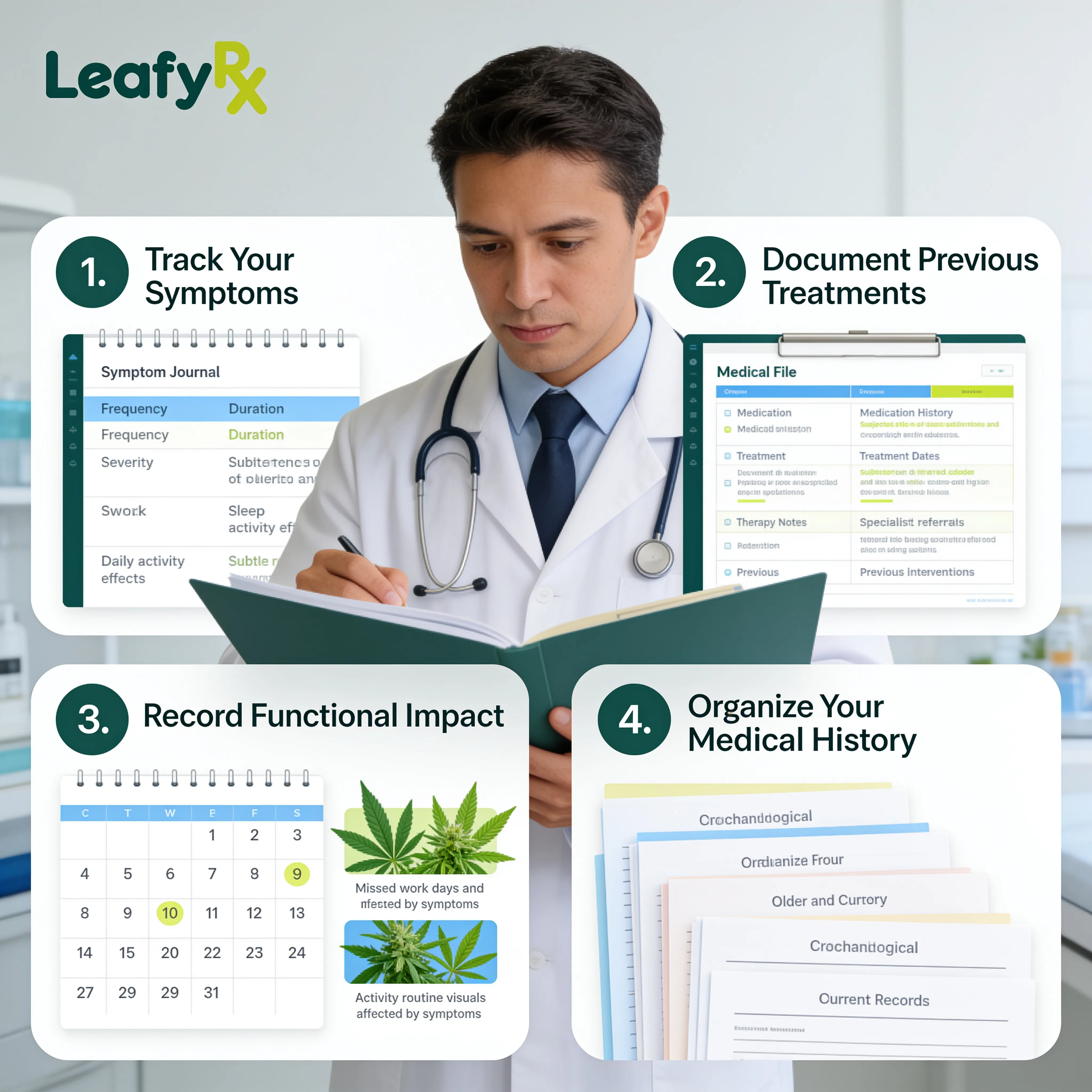
Bring a detailed symptom log that includes frequency, severity, and duration. Note how symptoms affect daily activities like work, sleep, or relationships.
Include records of previous treatments: medication lists with dates, therapy notes, specialist referrals, and documentation of failed interventions. This shows you’ve tried conventional options before exploring a medical card.
Prepare specific examples of functional impairment. According to the Marijuana Policy Project, documenting missed work days strengthens your case for certification. So does listing activities you can no longer do or relationships affected by your condition.
LeafyRX recommends organizing these records chronologically so your doctor can quickly see your treatment history and current status.
See if you qualify.
State-Specific Qualifying Condition Lists
Research your state’s qualifying conditions before the appointment and confirm your condition is listed. Each state maintains its own list, and what qualifies in one state may not qualify in another.
Guidance on Louisiana Marijuana Card recommends bringing printed copies of your state’s qualifying conditions list to reference during your appointment if needed.
Have questions ready about the medical card process, timeline, and what your doctor needs to provide if they agree to certify. Asking informed questions demonstrates you’ve done your research and understand the process.
What Your PCP Can and Cannot Do
Not all doctors can certify medical cards, even if they believe you qualify. State laws determine which doctors can certify patients, and these rules vary widely across the country.
State Certification Rules That Limit Primary Care Doctors
Some states require doctors to complete special training or register with the state medical board before they can certify patients. Others limit certification to specific specialties or cap the number of patients a doctor can certify each year.
In Florida, for example, doctors must complete a state-approved course and register with the Office of Medical Marijuana Use. California allows any licensed physician to certify, but they must establish a bona fide doctor-patient relationship first.
These regulations exist outside your doctor’s control. Your PCP may want to help but legally cannot serve as your certifying physician.
Why Many PCPs Refer to Specialists Instead
Time constraints often prevent primary care doctors from handling certifications. The process requires detailed documentation, follow-up appointments, and ongoing monitoring that many busy practices cannot accommodate.
Liability concerns also play a role. Some doctors worry about federal-state law conflicts or practice policies that discourage cannabis certifications. According to medical marijuana doctor versus PCP comparisons, specialized doctors have more experience with the certification process and qualifying conditions.
A refusal from your PCP does not mean you don’t qualify. It usually means they cannot be the certifying doctor due to practice limitations or state rules. Your doctor can still support your decision and provide medical records to specialists who handle certifications.
Seeking certification elsewhere will not damage your relationship with your primary doctor. Many PCPs expect and encourage referrals to specialists for this specific service. Read the full breakdown of which doctors can certify patients.
Should You Mention Cannabis You Already Use
Yes, you should tell your doctor if you already use cannabis. Honest disclosure makes your appointment safer and more productive.
Doctors need accurate information about all substances you use to avoid drug interactions and provide appropriate care. Hiding current use can lead to treatment plans that conflict with what you’re already doing.
Admitting current use does not disqualify you from certification. It actually helps doctors assess whether cannabis is working for you and whether adjustments might improve your results.
Key Considerations
Clinic notes usually include substance use history. There are no privacy workarounds, and trying to hide use creates more problems than it solves.
According to the American Institute of Health Care Professionals, open communication about cannabis use helps providers make better clinical decisions. It also reduces patient anxiety during medical visits.
Honesty protects you more than it harms you, especially if you experience side effects or need emergency care. Medical staff treating you in urgent situations need complete information to avoid dangerous drug combinations.
For example, if you’re using cannabis for sleep and also taking prescription sedatives, your doctor needs to know both to adjust dosages safely. Guidance from Teleleaf emphasizes that transparency about current use leads to better treatment outcomes and stronger patient-provider relationships.
Your doctor is evaluating whether medical cannabis fits your treatment plan. Knowing what you’ve already tried gives them the full picture they need to help you. Safer cannabis conversations with providers goes into more depth on this.
When to Use a Telehealth Evaluation Instead
Not every patient needs to have this conversation with their primary care doctor. In some cases, telehealth offers a faster and more practical path to certification.
Signs Your PCP Is Not the Right Path
You don’t have an established primary care doctor. If you haven’t seen a PCP in years or never had one, building a relationship just to request a medical card evaluation wastes time. It also wastes money.
Your PCP already said no. Many doctors won’t certify due to practice policies, liability concerns, or lack of registration with your state program. A refusal doesn’t mean you don’t qualify.
You want a faster process. Get a Medical card without a primary doctor.
Traditional appointments can take weeks to schedule. Telehealth platforms often provide same-day or next-day certification, which matters when you need relief quickly.
Your doctor isn’t familiar with medical card evaluations. Some PCPs have never certified a patient and don’t know the paperwork requirements. Specialists who focus on these evaluations understand the process better.
How Telehealth Medical Card Evaluations Work
Telehealth platforms connect you with licensed physicians who specialize in medical card certifications. These are real doctors, not shortcuts or workarounds. According to Quick Med Cards, the process starts with an online application where you submit your medical history and qualifying condition.
You’ll schedule a video consultation, usually within 24 to 48 hours. During the appointment, the doctor reviews your symptoms, treatment history, and whether you meet state requirements. The Pennsylvania Department of Health outlines specific qualifying conditions and documentation standards that telehealth doctors must follow.
If you qualify, the doctor submits your certification to the state registry the same day. Most telehealth services cost less than specialist visits and include money-back guarantees if you don’t qualify. This removes financial risk while providing access to doctors who understand the medical card process.
Conclusion
Learning how to talk to your doctor about a medical card comes down to preparation and knowing your options. Use the one-minute script and bring documentation of your symptoms and previous treatments. Understand that your primary care doctor may support you even if they can’t certify. A “no” from your PCP doesn’t mean you don’t qualify; it often just means they don’t offer certifications due to practice policies or state requirements
If your doctor can’t help or you don’t have an established PCP, telehealth evaluations offer a faster, legitimate path forward. Licensed physicians who specialize in medical card evaluations can review your condition and certify you in as little as one day. You’ll get the same professional assessment without the wait times or uncertainty.
Ready to start the evaluation process? Connect with a licensed healthcare provider who can evaluate your qualifying condition and guide you through the certification process.





 Ask ChatGPT
 Ask Claude
 Ask Perplexity