


Over 300,000 patients in Ohio use medical marijuana legally through the state’s regulated program. Getting an Ohio Medical Marijuana Card gives you legal access to therapeutic cannabis for qualifying conditions. But the registration process confuses many first-time applicants. You need to understand physician certifications, state requirements, and your legal rights.
This guide walks you through everything about obtaining and maintaining your Ohio medical marijuana card. You’ll learn the exact registration steps, what documents you need, and how long the process takes. We cover Ohio medical marijuana card requirements for adults, minors, and caregivers. You’ll discover your possession limits, where you can buy products, and what protections you have at work.
We also explain home cultivation laws, travel restrictions with your card, and privacy rights under current regulations. You’ll know exactly what to expect when you apply for your Ohio Medical Marijuana Card and how to stay compliant with state rules.
Registering for an Ohio Medical Marijuana Card
Getting your Ohio medical marijuana card starts with finding a licensed physician. You need a doctor with an active Certificate to Recommend (CTR). The State Medical Board database lists all certified physicians. Online evaluations cost $150-$250, while in-person visits run $200-$300.
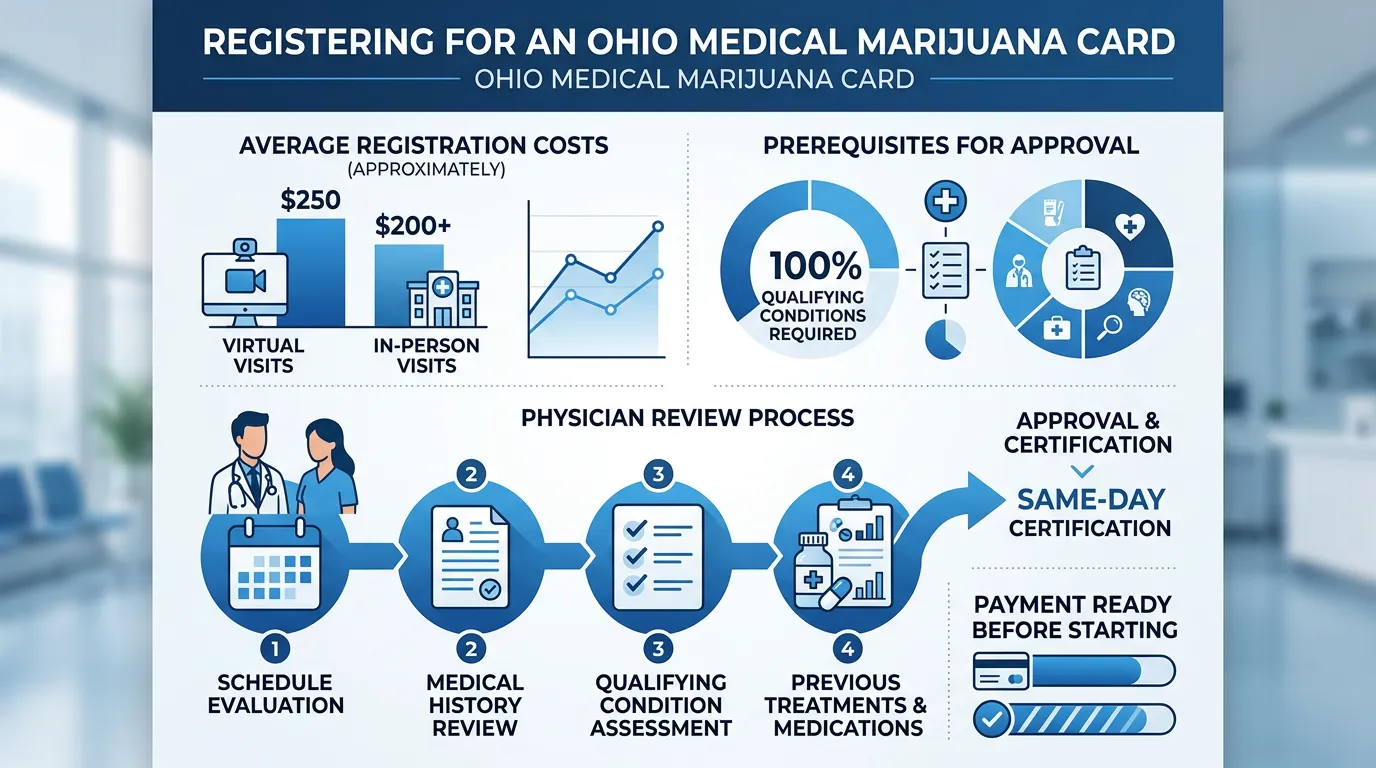
Once you find a doctor, schedule your evaluation. The physician reviews your medical history and qualifying conditions for medical marijuana approval. They assess previous treatments and medications. If approved, you receive your certification the same day.
What are the steps to register for the Ohio medical marijuana program?
After getting your physician certification, create an account on the Ohio Medical Marijuana Registry portal. Upload your certification to the state system. You’ll also need to pay the application fee.
The state processes applications quickly. Most patients receive approval within 1-3 business days. You get an email confirmation with your registry card number. This number grants immediate dispensary access.
Here’s what you need to complete registration:
-
Valid Ohio driver’s license or state ID proving residency
-
Medical records showing 6-12 months treatment history
-
Completed physician certification form
-
Payment method for application fee
What documents do I need to register as a patient?
The application fee is $50 for most patients. Veterans and indigent patients pay a reduced fee of $25. Have your payment method ready before starting.

Your medical records must document your qualifying condition. The records should show treatment attempts over 6-12 months. This proves you’ve tried other options first.
Monitor your application through the patient portal dashboard. Real-time updates show your status. If you encounter document upload errors or payment issues, contact state support. The complete 2026 Ohio medical marijuana card guide walks through troubleshooting common problems.
Medical Marijuana Cards for Minors and Caregivers
Minors under 18 can qualify for an Ohio medical marijuana card. They need parental or legal guardian consent. Two independent physician recommendations from different certified doctors are required.
Qualifying conditions for minors include epilepsy, cancer, chronic pain, and autism spectrum disorder. The process protects young patients while ensuring medical oversight. Both doctors must confirm the condition and treatment need.
Can minors get a medical marijuana card in Ohio?
Yes, minors can get an Ohio medical marijuana card with proper authorization. A parent or legal guardian must consent to the application. The minor needs two separate doctor recommendations.
Each physician must be certified by Ohio’s medical marijuana program. They evaluate the minor independently. This dual-approval system adds an extra safety layer.
The parent or guardian registers as the designated caregiver. They handle all dispensary purchases. The minor cannot buy products directly.
What are the caregiver rules in Ohio’s medical marijuana program?
Caregivers must meet specific Ohio medical marijuana card requirements to register. According to Greenbridge Society, caregivers must be 21 or older and Ohio residents with valid ID. They must pass a background check with no disqualifying drug convictions.
The application fee costs $50. Veterans and indigent applicants pay a reduced $25 fee. Relationship documentation to the patient is required.
Key caregiver requirements include:
-
Must be at least 21 years old
-
Valid Ohio driver’s license or state ID
-
Clean background check for drug offenses
-
Proof of relationship to patient
Caregivers can assist up to two patients at once. They buy products from licensed dispensaries. They store them securely away from unauthorized people.
You can add, change, or remove a caregiver through the online patient portal. The state approval process takes 1-3 business days. All parties receive notification of changes. Many families wonder how long the approval process takes after submitting caregiver documentation.
Caregivers have important responsibilities. They must maintain secure storage at all times. They cannot consume the patient’s products. They must accompany minor patients to dispensaries in some cases.
Ohio law provides caregivers the same legal protections as patients. They can legally possess and transport medical marijuana. This protection applies only when acting on behalf of their registered patient.
Buying, Possessing, and Using Medical Marijuana in Ohio
Ohio operates a 90-day supply system for medical marijuana possession. The Ohio Board of Pharmacy defines these limits based on product form. Patients can possess up to their remaining 90-day allotment. The state tracks this through a real-time registry system.
This registry integrates with all licensed dispensaries across Ohio. It prevents over-purchasing and ensures compliance. Your balance updates automatically at each purchase.
What are the possession limits for medical marijuana in Ohio?
According to the Marijuana Policy Project, patients can possess approximately 8 ounces of flower equivalent for a 90-day period. The system uses conversion factors for different product types. Concentrates, edibles, tinctures, and topicals all count toward your limit.
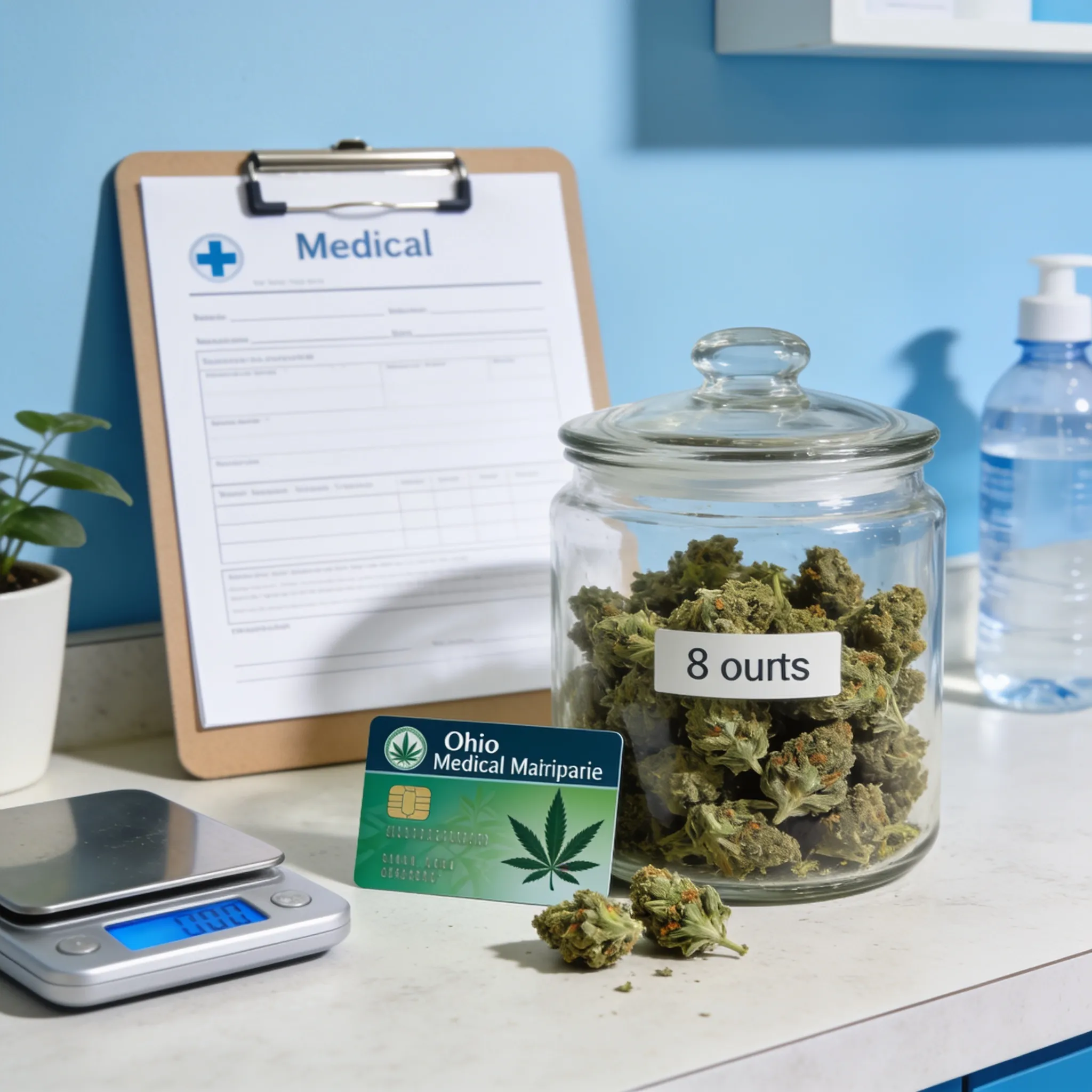
Dispensary staff calculate these conversions automatically. The registry system deducts from your balance at point of sale. Your 90-day period resets from your first purchase date.
Daily purchase limits allow you to buy up to your remaining allotment. You can’t exceed your limit across multiple dispensaries. The real-time tracking system prevents this statewide.
Ohio has 50+ licensed dispensaries offering various services. Most provide online menus with product details and pricing. Many locations offer pre-ordering systems for faster pickup. Some areas now have delivery options available.
Can I drive after using medical marijuana in Ohio?
Driving under the influence of marijuana remains illegal in Ohio. Your medical card doesn’t provide an exception. Zero tolerance enforcement applies to all drivers.
Law enforcement uses field sobriety testing to detect impairment. Blood tests measure THC levels in your system. DUI penalties include license suspension and criminal charges.
Legal protections exist for proper possession with your valid card. You can’t be arrested for amounts within your 90-day limit. Keep products in original dispensary packaging at all times. Never consume in public or share with non-patients.
Certain activities can result in card revocation and criminal charges. Smoking flower products is prohibitedonly vaping is allowed. Public consumption in any form violates state law. Sharing or selling to others carries serious penalties. Possessing amounts exceeding your 90-day supply limit is illegal. Understanding medical marijuana card costs by state helps you budget for your certification and ongoing compliance needs.
Can You Grow Medical Marijuana at Home in Ohio?
Home cultivation of medical marijuana is completely illegal in Ohio. No exceptions exist for patients or caregivers. Even with an Ohio medical marijuana card, you can’t grow cannabis at home.
The state requires all medical marijuana to come from licensed dispensaries. These facilities track inventory, test products for safety, and use child-resistant packaging. The Ohio Division of Cannabis Control enforces strict quality standards.
Can I grow my own cannabis at home in Ohio?
No. Growing cannabis at home carries serious legal consequences. Penalties depend on plant count but start harsh.
Here’s what you risk:
-
Misdemeanor charges for small amounts
-
Felony charges for larger operations
-
Fines up to $20,000
-
Jail time from 6 months to 8 years
-
Automatic medical marijuana card revocation
That said, change may be coming. Pending bills in the Ohio legislature propose limited home cultivation for medical patients. Advocacy groups push hard for cultivation rights.
Timeline predictions suggest possible changes by 2026-2028. Michigan already allows home growing. Ohio may follow.
For now, the state prohibits home cultivation for several reasons. Officials want control over product quality and safety. They aim to prevent diversion to illegal markets. Tracking and taxation of all sales matters to regulators. Concerns about underage access in homes with plants also drive policy.
In the meantime, you have alternatives. Select dispensaries with competitive pricing and loyalty programs. Take advantage of patient discounts. Veterans, seniors, and those with financial hardship often get 10-20% off. Understanding the benefits of having a medical marijuana card helps you maximize savings and access.
Buy in bulk during sales. Compare product prices across multiple dispensaries using online menus. These strategies help offset the cost of dispensary purchases.
Traveling With an Ohio Medical Marijuana Card
Your Ohio medical marijuana card only works within state boundaries. Federal law still classifies marijuana as a Schedule I controlled substance. This makes traveling with medical marijuana complicated and risky.
Does Ohio recognize medical marijuana cards from other states?
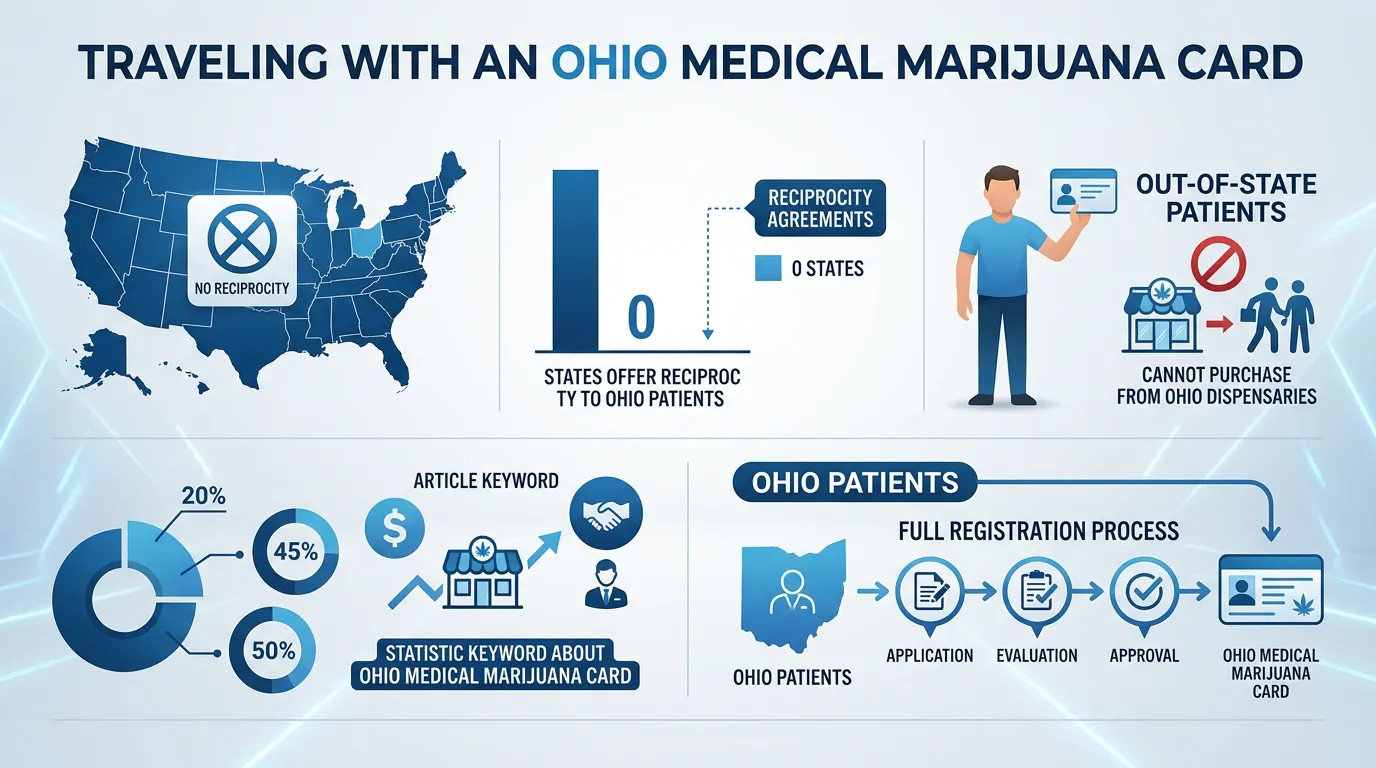
Ohio doesn’t recognize out-of-state medical marijuana cards. The state has no reciprocity agreements with any other states. Visitors with cards from other states can’t buy from Ohio dispensaries.
Out-of-state patients need to get an Ohio medical marijuana card through the full registration process. You must find an Ohio-licensed physician willing to certify out-of-state patients. You’ll need to provide an Ohio address. A temporary residence works for this requirement.
After that, you complete the state registry application. You pay all standard fees just like Ohio residents. The process takes the same amount of time.
Leaving Ohio with medical marijuana is illegal under federal law. Interstate transport is a federal crime. Your Ohio medical marijuana card provides no legal protection outside state boundaries.
TSA security screeners must report marijuana discoveries to law enforcement. This applies even if you have a valid medical card. Potential consequences include:
-
Product confiscation at security checkpoints
-
Missed flights and travel delays
-
Criminal charges in some jurisdictions
-
Federal prosecution in severe cases
Driving across state lines with medical marijuana is also illegal. This applies even when traveling between two states with medical programs. Border patrol and state police can search vehicles and make arrests.
Several states do recognize out-of-state cards. Michigan accepts cards from other states. Pennsylvania offers limited reciprocity. But you still can’t transport products across state lines.
The safest approach is simple. Leave all medical marijuana products at home when traveling outside Ohio. Research medical marijuana programs in your destination state. Consider getting a temporary card if you’re staying long-term. Never attempt to transport products across state or international borders.
Employment, Insurance, and Patient Rights
Getting an Ohio medical marijuana card comes with financial and workplace considerations. You need to know what costs you’ll face. You also need to understand how your card affects your job.
Does Medicaid or insurance cover medical marijuana in Ohio?
No insurance plan covers medical marijuana in Ohio. This includes Medicaid, Medicare, and private insurance. Federal law classifies marijuana as a Schedule I substance. The FDA hasn’t approved it as medicine.
You’ll pay out-of-pocket for everything. This includes your physician consultation, state application fee, and all products. No reimbursement is available.
Here’s what you’ll spend in your first year:
-
Physician consultation: $150-$250
-
State application fee: $50 standard, $25 reduced for veterans
-
Total first-year costs: $200-$350 plus products
Annual renewal costs less. You’ll pay $100-$200 for physician recertification. The state renewal fee stays at $50 standard or $25 reduced. Total renewal runs $150-$250 per year.
Product costs vary widely. Your condition severity and consumption patterns determine what you spend. Some patients use small amounts monthly. Others need daily doses for chronic conditions.
Does an Ohio medical marijuana card protect me from employer drug policies?
No, your card doesn’t protect you at work. Ohio law doesn’t require employers to accommodate medical marijuana use. Companies can maintain zero-tolerance drug policies.
Employers can refuse to hire you if you test positive. They can also fire you for a positive test. Your valid card doesn’t change this. The Ohio Medical Marijuana Registry portal confirms that state law gives employers broad discretion on workplace policies.
Some positions face stricter rules. Safety-sensitive jobs must follow federal requirements. This includes CDL holders, healthcare workers, and federal contractors. These employers can’t make exceptions.
You do have limited protections. Employers can’t discriminate based solely on card status. They need a positive drug test. Some courts have ruled for employees in specific cases.
Here’s how to protect yourself:
-
Disclose your card status before drug testing when possible
-
Read company policies before accepting a job offer
-
Consider cannabis-friendly industries if your condition requires regular use
-
Consult an employment attorney if you face discrimination without a positive test
The bottom line is simple. Your Ohio medical marijuana card gives you legal access to products. It doesn’t give you workplace protections. Plan accordingly when managing your career and health needs.
Ohio Medical Marijuana Laws and Regulations
Ohio’s medical marijuana program operates under strict state oversight. You need to know how these laws affect your ability to get and use an Ohio medical marijuana card. The rules cover everything from patient privacy to who can apply.
Can a felon get a medical marijuana card in Ohio?
Felons can obtain an Ohio medical marijuana card as patients. No automatic disqualification exists based on criminal history for patient applicants. You must meet all standard Ohio medical marijuana card requirements.
Here’s what you need to qualify:
-
A qualifying medical condition from Ohio’s approved list
-
Physician certification from a licensed Ohio doctor
-
Proof of Ohio residency with valid documentation
However, caregiver applicants face different rules. The state requires background checks for all caregiver applications. Certain felony drug convictions can disqualify you from becoming a caregiver.
Disqualifying offenses include drug trafficking and recent drug possession convictions. Violent crimes also prevent caregiver approval. The Ohio Division of Cannabis Control reviews each case individually.
Is my Ohio medical marijuana information protected by privacy law?
Your patient registry information receives strong protection under HIPAA and Ohio privacy laws. The state cannot share your information with employers or landlords. Public disclosure requires your consent or a court order.
Law enforcement access is limited. Police cannot search the registry database without a warrant. Traffic stops don’t automatically trigger registry checks. You should carry your physical or digital card for verification during legal possession.
That said, some limitations exist. Courts can order registry information disclosure in criminal proceedings. Child custody cases may consider your medical marijuana use. Federal agencies aren’t bound by state privacy protections.
Who regulates the medical marijuana program in Ohio?
The Ohio Division of Cannabis Control oversees the entire medical marijuana program. This agency handles patient and caregiver registration. It licenses and monitors dispensaries, cultivators, processors, and testing laboratories.
The State Medical Board of Ohio manages physician certification. It issues Certificates to Recommend to qualified physicians. Doctors must complete continuing education on medical marijuana. The board investigates complaints and can revoke certifications for violations.
The Ohio Board of Pharmacy defines possession limits and product standards. It establishes 90-day supply calculations for different product forms. The board sets quality and safety standards for dispensary products. It updates regulations based on program data and patient needs.
Conclusion
Getting your Ohio medical marijuana card involves several key steps. You need physician certification through the state portal. You must understand possession limits and dispensary-only purchasing rules. Minors require extra documentation and caregiver designation. Your card works only within Ohio’s borders.
The Ohio medical marijuana card registration process demands attention to detail. You can’t grow at home. Out-of-state cards don’t transfer. Employment protections remain limited. Insurance won’t cover your costs. However, the registry protects your privacy under state law.
Start your renewal 30 to 60 days before expiration. This keeps your access uninterrupted. Ohio’s 50-plus licensed dispensaries serve registered patients daily. You need current documentation to maintain legal status.
Ready to begin your Ohio Medical Marijuana Card application? Leafy Rx connects you with licensed physicians for fast online evaluations. We offer same-day approval and a money-back guarantee. Join over 100,000 patients who simplified their certification through our HIPAA-compliant platform. Schedule your consultation today and take the first step toward legal symptom management.






 Ask ChatGPT
  Ask Claude
  Ask Perplexity