


Pennsylvania’s medical marijuana program has helped over 400,000 patients since 2026. But getting your Pennsylvania Medical Marijuana Card still confuses many first-time applicants. You might wonder about costs, qualifying conditions, or whether you’re even eligible. This uncertainty delays access to treatment you need.
This guide walks you through every step of obtaining your card in 2026. You’ll learn the current PA medical marijuana card cost, all 23 qualifying conditions, and the complete registration process. We cover telehealth options, caregiver requirements, and renewal steps. You’ll also discover how to access dispensaries, travel rules, and employment protections.
The application process is simpler than you think. Most patients complete their Pennsylvania Medical Marijuana Card registration within days. Let’s break down exactly what you need to do.
Complete List of Qualifying Conditions for Pennsylvania Medical Marijuana in 2026
Pennsylvania recognizes 23 qualifying medical conditions for a Pennsylvania Medical Marijuana Card. These conditions range from chronic pain to terminal illnesses. Over 60% of patients qualify through chronic pain alone. The state’s program continues to expand access each year.
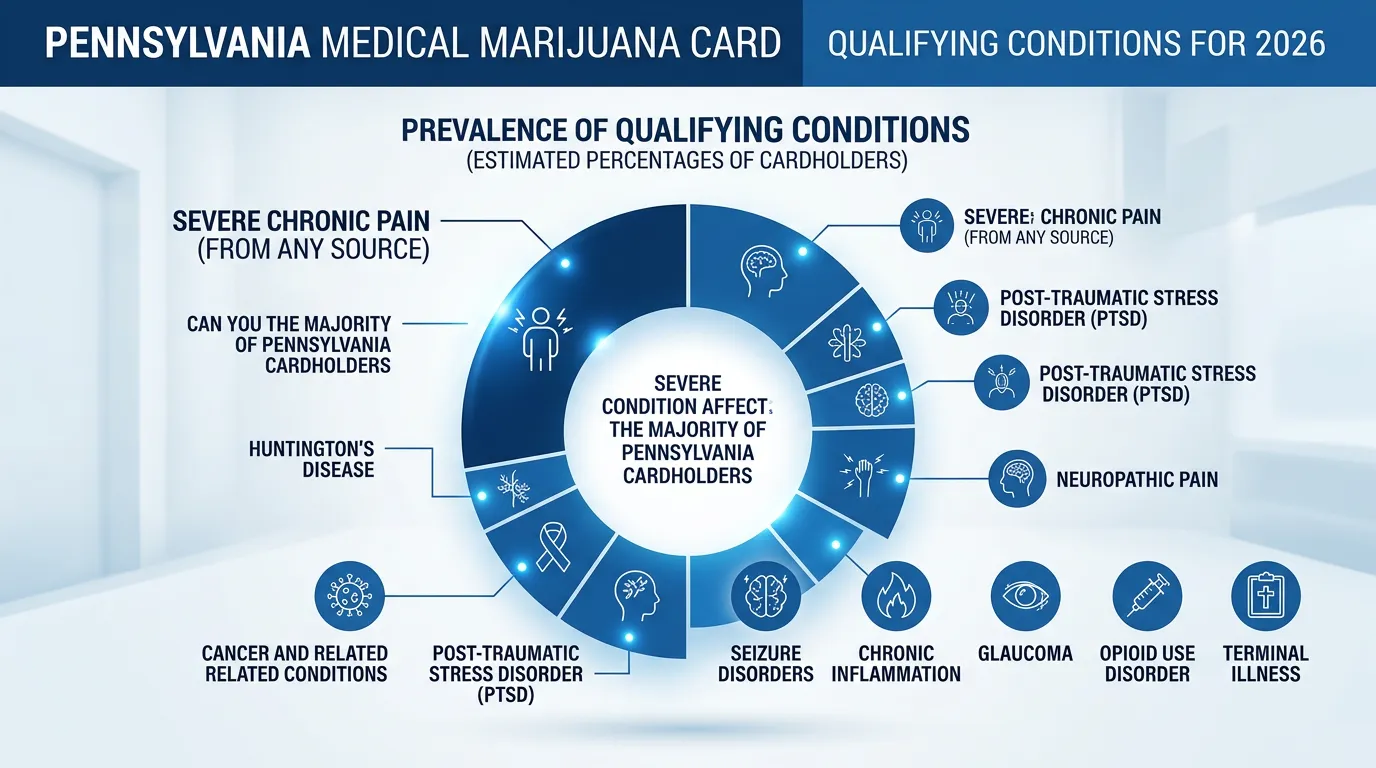
Physicians hold discretion to certify patients with serious conditions not explicitly listed. This flexibility helps patients who may benefit from cannabis therapy. You need a doctor’s approval to start the process.
Chronic Pain and Neurological Conditions
Chronic pain tops the list of qualifying conditions for medical marijuana certification. It affects the majority of Pennsylvania cardholders. Severe chronic pain from any source can qualify you.
Neurological conditions also make the list. These include epilepsy, multiple sclerosis, and Parkinson’s disease. Seizure disorders respond well to cannabis treatment in many cases.
Other neurological conditions include:
-
Huntington’s disease
-
Amyotrophic lateral sclerosis (ALS)
-
Neuropathies
-
Damage to nervous tissue of the spinal cord
Intractable seizures qualify regardless of underlying cause. This gives doctors flexibility in treatment options.
Mental Health Conditions
Pennsylvania added mental health conditions in recent years. This change expanded access significantly for thousands of patients. Anxiety disorders now qualify for certification.
PTSD also makes the approved list. Many veterans and trauma survivors benefit from this inclusion. Depression and other mood disorders may qualify under physician discretion.
Mental health certification requires documented diagnosis. Your doctor must confirm cannabis may provide therapeutic benefit. The approval process works the same as physical conditions.
Cancer and Terminal Illnesses
All cancer types qualify for Pennsylvania medical card qualifying conditions. This includes active cancer and remission-related symptoms. Treatment side effects like nausea also qualify.
Terminal illnesses qualify regardless of specific diagnosis. If you’re wondering whether your terminal condition qualifies for certification, the answer is yes. Life expectancy under one year meets the criteria.
Other serious conditions include:
-
Crohn’s disease and inflammatory bowel disease
-
HIV/AIDS
-
Glaucoma
-
Severe chronic pain causing functional impairment
According to Pennsylvania Department of Health, the program serves over 400,000 active patients. This makes Pennsylvania one of the largest medical cannabis programs nationwide.
Registering for a Pennsylvania Medical Marijuana Card
Getting your Pennsylvania medical marijuana card starts with the state registry. You need to complete several steps before you can access dispensaries. The process is straightforward but requires attention to detail.
What are the steps to register for the Pennsylvania Medical Marijuana Program?
Your first step is creating an account on the Pennsylvania Medical Marijuana Registry website. This gives you a patient ID number. You need this number before seeing a physician.
Next, schedule an appointment with a Pennsylvania-approved physician. They can certify your qualifying condition. You can choose in-person or telehealth visits. Many patients prefer telehealth for convenience.
After certification, you have 90 days to complete your state application. This deadline is strict. Missing it means starting over with a new physician visit.
What documents do I need to register as a patient?
You’ll need three key documents for registration:
-
Valid Pennsylvania driver’s license or state ID
-
Proof of residency showing your current address
-
Physician certification from your approved doctor
Your proof of residency can be a utility bill or lease agreement. It must match the address on your ID. Keep digital copies ready for upload.
The physician certification comes directly from your doctor. They submit it through the state system. You don’t need to handle this document yourself.
How do I pay for and receive my ID card?
The PA medical marijuana card cost is $50 for the state application fee. You pay this online when submitting your documents. The system accepts major credit and debit cards.
After payment, you’ll receive an approval email within 7-14 business days. This email includes your temporary card. You can print it immediately and use it at dispensaries.
Your physical card arrives by mail in 2-3 weeks. The entire process from registration to receiving your card takes 2-4 weeks on average. Planning ahead helps avoid delays.
Platforms like Leafy Rx streamline this process by connecting you with approved physicians quickly. This cuts down wait times significantly. Understanding how to complete your medical card application online makes the process even smoother.
Program Fees and Discounts
Getting a Pennsylvania medical marijuana card involves two main costs. You’ll pay for the doctor consultation and the state application fee. Understanding these expenses helps you budget properly.
The state charges a $50 application fee for standard patients. This applies to both your initial application and annual renewal. You can’t skip this fee unless you qualify for a waiver.
Are there fee waivers or discounts?
Pennsylvania offers significant fee reductions for qualifying patients. The state fee drops to $0 for those receiving financial assistance. This includes programs like Medicaid, SNAP, PACE, or WIC.
To get the waiver, submit proof of eligibility with your application. Veterans and patients facing financial hardship can also apply. You’ll need documentation showing your qualifying status.
Doctor consultation fees vary by provider. Most charge between $99 and $250 for evaluations. Online telehealth consultations typically cost $125 to $199. This makes them more affordable than in-person visits.
Your total first-year cost ranges from $149 to $300. This includes both the doctor visit and state fee. Most patients pay around $175 to $250 for everything.
Leafy Rx offers competitive pricing at $149 for first-time certifications. They include a money-back guarantee if you’re not approved. This removes financial risk from the process.
Comparing medical marijuana card costs across providers helps you find the best value. Some charge extra for rush processing or additional services. Always check what’s included in the quoted price.
Annual renewals cost less than initial applications. You’ll pay the $50 state fee again. Doctor recertification fees typically run $99 to $150. Budget about $150 to $200 per year to maintain your card.
Medical Marijuana Cards for Minors and Caregivers
Pennsylvania allows minors under 18 to get a medical marijuana card. The process requires parental or legal guardian consent. An approved physician must certify the minor’s qualifying condition.
Two caregivers must be designated for each minor patient. These caregivers handle all purchases and administration of medical marijuana. The minor can’t buy or possess the medicine directly.
Can minors get a medical marijuana card in Pennsylvania?
Yes, minors can obtain a Pennsylvania medical marijuana card with proper authorization. A parent or legal guardian must consent to the application. The minor needs certification from a state-approved physician.
The caregiver system protects minors while ensuring access to treatment. Both caregivers share responsibility for the minor’s medicine. They must coordinate purchases from licensed dispensaries.
According to Pennsylvania patient and caregiver regulations, caregivers must pass background checks before approval. This requirement ensures patient safety and program integrity.
Who can serve as a caregiver?
Caregivers must meet specific PA MMJ card caregiver requirements. They need to be at least 21 years old. Pennsylvania residency is mandatory for all caregivers.
Each caregiver must pass a state background check. The application costs $50 per caregiver. Financial assistance recipients can get the same fee reduction available to patients.
Here’s what caregivers can and can’t do:
-
Purchase medical marijuana from dispensaries for their patients
-
Possess and transport medicine on behalf of patients
-
Administer medical marijuana to designated patients
-
Assist up to five patients maximum
Each patient can designate up to two caregivers. Caregivers have legal protection for these activities. That said, they can’t use the medical marijuana themselves.
The caregiver role carries serious responsibility. You’re managing medicine for vulnerable patients. The state monitors compliance to protect both parties.
Buying and Using Medical Marijuana
Once you get your Pennsylvania medical marijuana card, you can start shopping right away. You don’t need to wait for a physical card to arrive. Print your temporary card from the approval email and head to any licensed dispensary.
When can I start buying cannabis after I get my card?
You can buy medical cannabis immediately after approval. The state sends your approval email with a temporary card. This temporary card works just like the physical version.
Bring your printed temporary card and state-issued ID to any dispensary. Staff will verify your information in the state database. The whole process takes just a few minutes.
Pennsylvania has over 150 dispensaries statewide. You’ll find multiple locations in Philadelphia, Pittsburgh, and Harrisburg. Most major cities have at least one nearby option.
What are the possession limits?
Pennsylvania sets possession limits based on a 30-day supply. Your physician determines what counts as a 30-day supply for your condition. The state doesn’t specify exact weight limits.
Dispensaries track all purchases through a state database. This system prevents you from buying more than your allowed amount. You can’t accidentally exceed your limit.
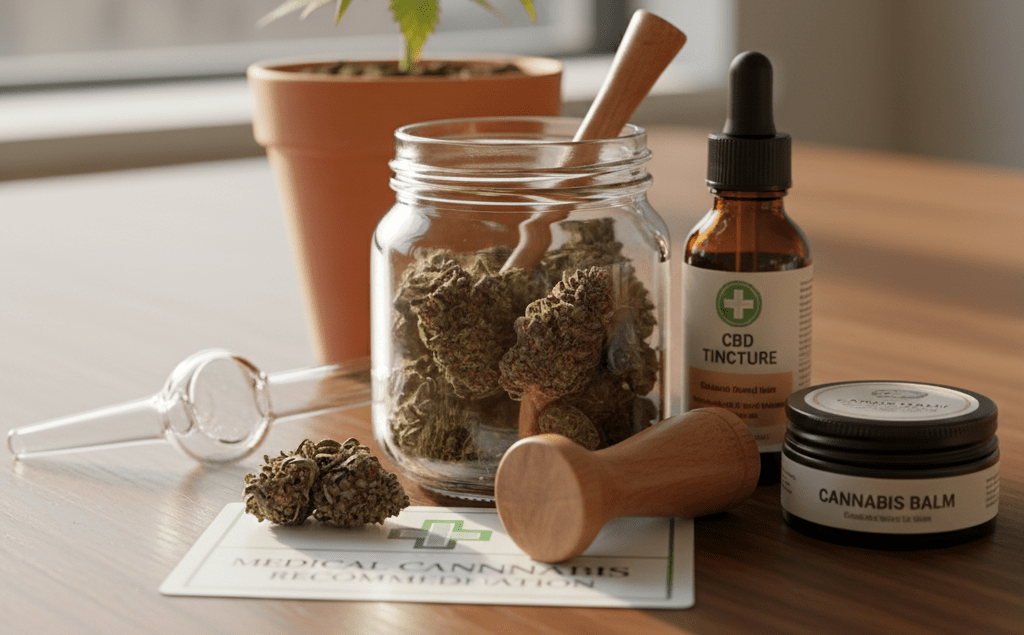
Each purchase requires your valid Pennsylvania medical marijuana card and state ID. Dispensaries offer several product types:
-
Flower for vaporizing
-
Vape cartridges and pens
-
Tinctures and oils
-
Capsules and pills
-
Topical creams and balms
-
Concentrates and extracts
Dispensary staff help you choose products for your qualifying condition. They provide dosing guidance based on your needs. Many patients find this support helpful when starting treatment. Understanding the benefits of having a medical card helps you make informed decisions about your care.
Can You Grow Medical Marijuana at Home?
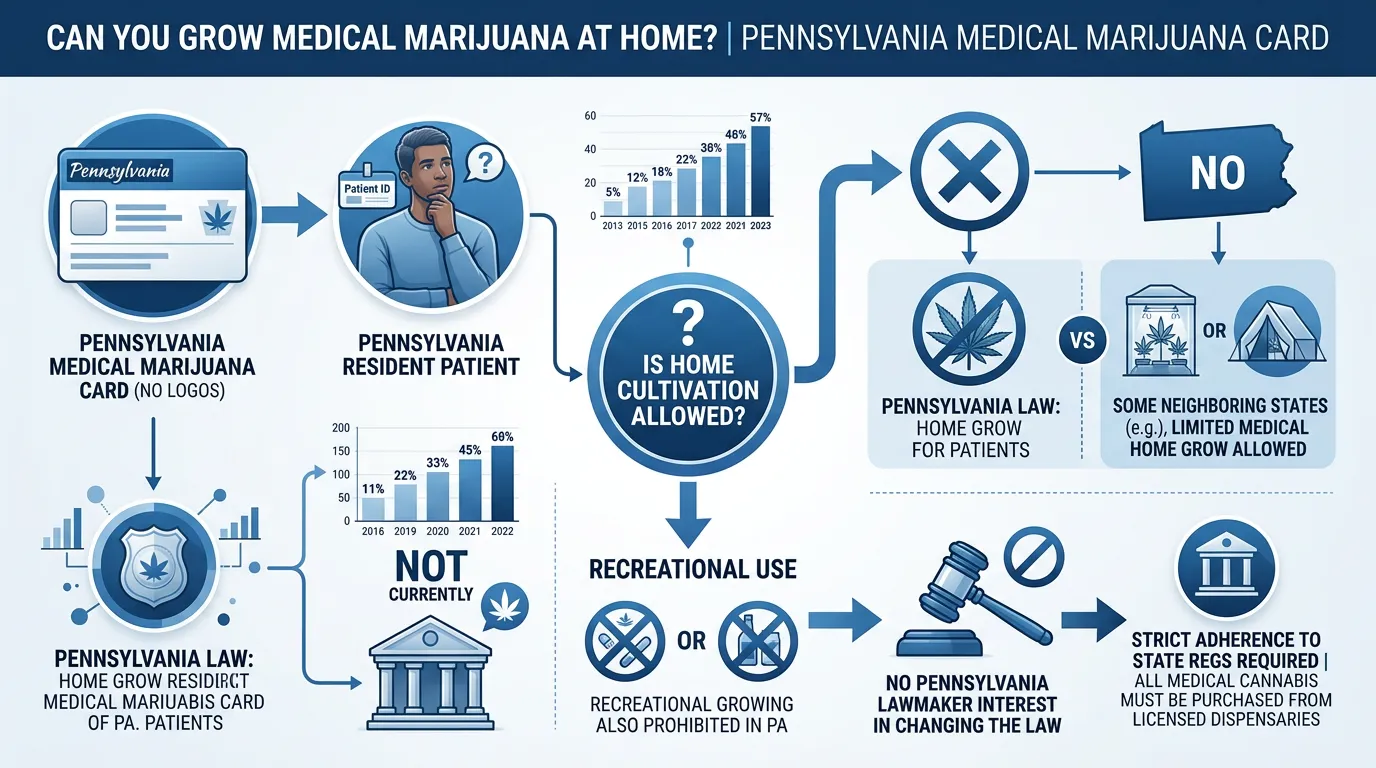
Many patients wonder if their Pennsylvania medical marijuana card allows home cultivation. The answer is clear: no. Pennsylvania law prohibits home cultivation of cannabis, even for registered medical patients.
Can I grow my own cannabis at home?
Pennsylvania law only permits licensed growers and processors to cultivate cannabis. This restriction applies to everyone, including those with valid medical cards. The state maintains strict control over the entire supply chain. home cultivation of marijuana remains illegal goes into more depth on this.
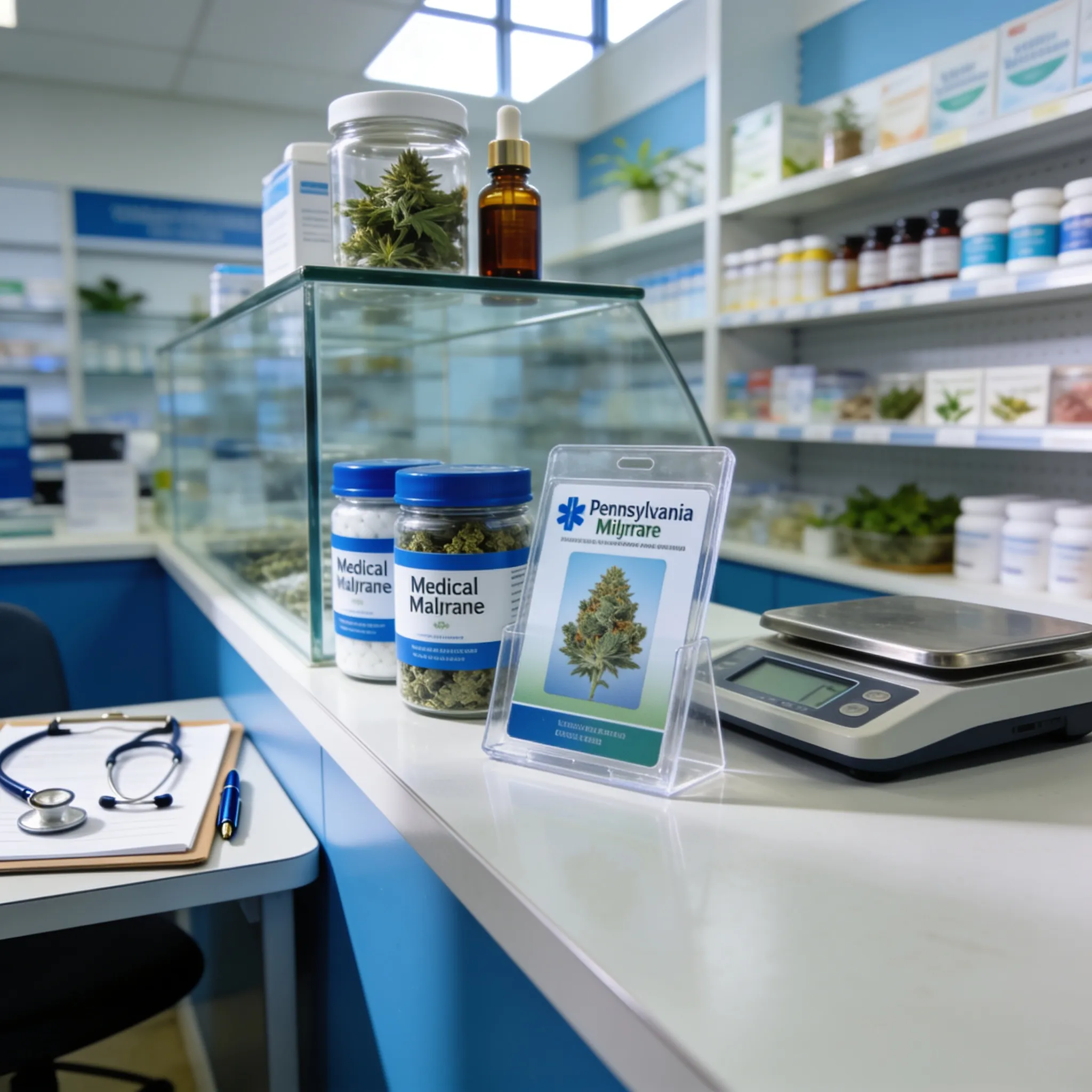
Patients caught growing marijuana at home face serious consequences. Criminal charges can include possession with intent to deliver and cultivation penalties. These charges carry potential jail time and fines.
All medical marijuana must come from state-licensed dispensaries. This requirement ensures product safety, testing, and regulatory compliance. Dispensaries follow strict quality control protocols that home growers can’t replicate.
Some advocacy groups push for home cultivation rights. They argue patients should have the same freedoms as other states. However, no legislative changes are expected in 2026.
The prohibition affects Pennsylvania medical card qualifying conditions patients differently than in other states. Some neighboring states allow limited home growing for medical patients. Pennsylvania lawmakers have shown no interest in changing the current law.
Patients who need specific strains or products should work with dispensaries. Many dispensaries offer wide selections and can special order items. This system keeps patients within legal boundaries while meeting their medical needs.
Traveling With Your Pennsylvania Medical Marijuana Card
Your Pennsylvania medical marijuana card gives you legal access within the state. But what happens when you travel? Understanding the rules can save you from legal trouble.
Pennsylvania has reciprocity agreements with several states. This means out-of-state patients can buy at PA dispensaries. New Jersey is one state with this agreement. However, you must register first.
Does Pennsylvania recognize cards from other states?
Yes, Pennsylvania recognizes medical marijuana cards from states with reciprocity agreements. Out-of-state patients must register as visiting qualified patients. You do this through Pennsylvania’s medical marijuana registry before purchasing.
The registration process is quick. You need your valid out-of-state card and basic information. Once approved, you can buy at any PA dispensary.
Pennsylvania medical marijuana cards work in states with reciprocity too. But always verify current agreements before you travel. State laws change often.
Critical federal law reminder: Transporting medical marijuana across state lines remains illegal. This applies even between states with medical programs. Federal law prohibits cannabis possession everywhere.
Never travel by air with medical marijuana. TSA follows federal law. They can confiscate your medicine and report you to authorities.
When traveling within Pennsylvania, follow these rules:
-
Keep medical marijuana in original dispensary packaging
-
Make sure labels are visible and intact
-
Carry your medical marijuana card at all times
-
Store products in your trunk while driving
These simple steps protect you during traffic stops. They prove you’re a legal patient with proper documentation.
Employment and Driving Laws
Your Pennsylvania medical marijuana card offers some legal protections at work. But it doesn’t give you unlimited rights. Employers still maintain control over workplace safety policies.
Does a card protect me from employer drug policies?
Pennsylvania law prevents employers from discriminating against you just for holding a medical card. They can’t fire you or refuse to hire you based on your patient status alone. However, workplace protections for medical marijuana patients have clear limits.
Employers can take action if you’re impaired at work. They can also enforce drug-free policies for safety-sensitive positions. These include:
-
Commercial drivers and transportation workers
-
Healthcare professionals handling patient care
-
Positions requiring federal security clearances
-
Jobs involving heavy machinery operation
Your employer can’t punish you for off-duty use. But they can act if your work performance suffers. They can also require drug testing in certain situations.
Can I drive after using medical marijuana in Pennsylvania?
Driving under the influence remains illegal with a Pennsylvania medical marijuana card. The state enforces zero-tolerance DUI laws for cannabis. Any detectable amount in your system can lead to charges.
This creates a challenge for patients. THC stays in your bloodstream for days or weeks. You might face DUI charges even when you’re not impaired. Police can arrest you if they detect any THC during a traffic stop.
Wait several hours after using medical marijuana before driving. Never get behind the wheel while feeling impaired. The safest approach is to avoid driving on days you use your medication. Plan ahead for transportation if you need to use cannabis during the day.
Pennsylvania medical marijuana laws in 2026 don’t provide driving exceptions. Your card protects your right to use cannabis medically. But it doesn’t shield you from DUI prosecution.
Other Pennsylvania Medical Marijuana Laws
Pennsylvania’s medical marijuana program includes several important legal considerations beyond basic eligibility. Understanding these rules helps you navigate the system more effectively.
Can a felon get a medical marijuana card in Pennsylvania?
Yes, felons can obtain a Pennsylvania medical marijuana card. Criminal history doesn’t disqualify you from the program. You just need to meet the standard requirements.
To qualify, you must have one of the recognized qualifying medical conditions approved by state law. You also need to prove Pennsylvania residency. Your past convictions won’t block your application.
That said, caregivers face different rules. They must pass background checks before helping patients. This protects vulnerable individuals in the program.
Would I still need a card if recreational cannabis were legal?
Pennsylvania hasn’t legalized recreational cannabis as of 2026. Your Pennsylvania medical marijuana card remains the only legal way to access cannabis products. But what happens if the state changes its laws?
Medical cards would still provide significant benefits even after recreational legalization. Here’s what you’d keep:
-
Lower taxes on purchases compared to recreational buyers
-
Access to higher potency products not available recreationally
-
Workplace protections for medical cannabis patients
-
Higher possession limits than recreational users
-
Priority access to products during shortages
Most states that legalize adult-use cannabis maintain their medical programs. Medical patients receive legal protections that recreational users don’t get. You’d also avoid the higher taxes that typically apply to recreational sales.
The PA medical marijuana card cost becomes even more valuable when you factor in these ongoing benefits. Medical patients often save money long-term despite the initial certification expense.
Conclusion
Getting your Pennsylvania medical marijuana card doesn’t have to be complicated. This guide covered everything from qualifying conditions to registration steps. You learned about program fees, caregiver options, and legal protections. We explained dispensary access, travel restrictions, and employment laws.
The process takes just 2-4 weeks from start to finish. First, register with the state medical marijuana registry. Then, get certified by an approved physician. Complete your application within 90 days of certification. Most patients pay between $149 and $300 total.
You now understand the PA medical marijuana card cost and fee waiver options. You know which conditions qualify and how the program protects you. You can shop at any licensed dispensary once approved.
Ready to start your application? Leafy RX connects you with licensed Pennsylvania physicians for quick online evaluations. We offer a money-back guarantee and have helped over 100,000 patients. Begin your evaluation today and get legal access to medical cannabis treatment with your Pennsylvania Medical Marijuana Card.




 Ask ChatGPT
  Ask Claude
  Ask Perplexity